
Talks on the DMA's Brussels Effect
Authored by: Mónika Mercz
Blogpost on Talks on the DMA's Brussels Effect

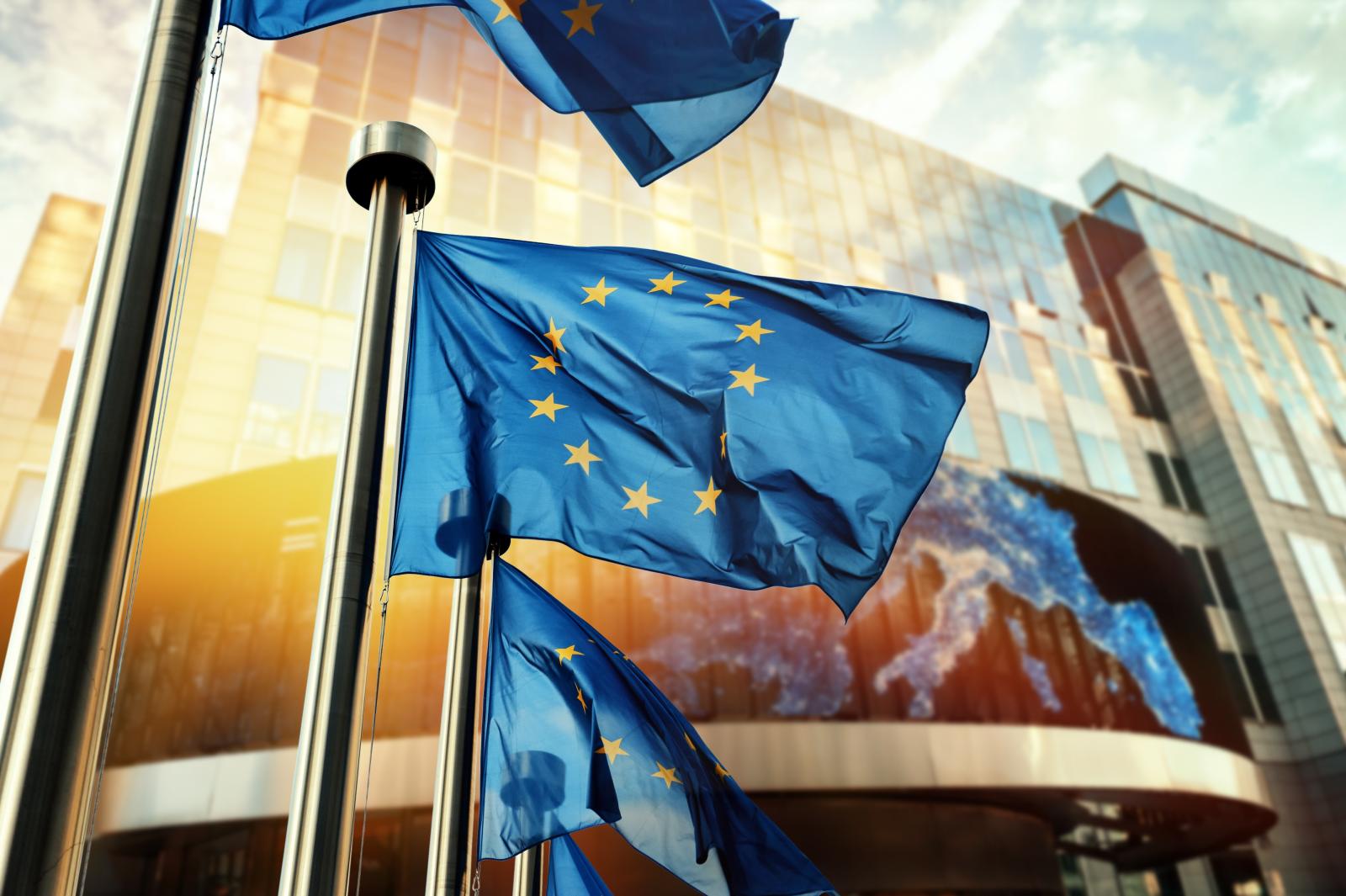 European Union
The George Washington University Competition and Innovation Lab has launched the European Initiative to gain a comprehensive understanding of regulation in the digital domain and innovation dynamics across various global regions. This initiative aims to amplify the perspectives of European nations, providing insights into their distinct economic landscapes and mutual relationships. European countries are at the forefront of trends in digital trade, competition policy, and intellectual property, necessitating nuanced and in-depth analyses.
The European Union is leading global efforts in digital trade agreements and data governance, notably playing a pivotal role in negotiating the first global rules on digital trade within the World Trade Organization (WTO). In digital platform regulation, the EU's initiatives include the Digital Markets Act and the Digital Services Act, extending to artificial intelligence with the AI Act and discussions on the Standard Essential Patents Regulation. Furthermore, the EU is emphasizing alignment and coordination between market authorities to ensure consistency across various market sectors.
This chapter aims to facilitate debates and interactions among academics, policy officers from national and international organizations, and the private sector about a common regulatory toolbox. The goal is to enable supervisors and market authorities to develop best practices and avoid fragmented approaches. While European countries face similar challenges, significant differences among them must be taken into account. For instance, while the EU has begun to introduce new regulations to bring legal harmonization, Germany believes the European Commission should be empowered to impose remedies
after a sector inquiry.
Key questions for discussion during the European initiative include how market authorities can build coordination and institutional alignment to avoid redundancy and negative externalities. Additionally, the initiative will explore the integration of trade and competition policy at the cross-border level, recognizing that trade policy and domestic regulation are interconnected. Understanding the antitrust implications of trade rules, particularly in how the EU relates to China, the US, and the Global South, is crucial for shaping inclusive and effective policies.
This initiative underscores the importance of collaboration and tailored approaches in addressing the complex landscape of digital trade and innovation regulation within the European context, ultimately contributing to the development of more coherent and effective global policies.

GW CIL’s European Union Initiative Lead

October 2, 2024 - 11:30 AM
OECD Workshop
September 24, 2024 to September 27, 2024
2024 Lear Competition Festival
September 24, 2024 to September 27, 2024
2024 Lear Competition Festival
September 24, 2024 to September 27, 2024
2024 Lear Competition Festival
September 24, 2024 to September 27, 2024
2024 Lear Competition Festival
September 20, 2024 - 10:00 AM
The DMA's Brussels Effect
July 26, 2024 - 12:00 PM
Will Europe Eat The World? Tech Competition Policy Learned From DMA

July 3, 2024 - 12:00 AM
UNCTAD Conference

June 3, 2024 - 8:00 AM
G7 - GW Lab - Italian Central Bank

Konstantina Bania is a partner at Geradin Partners where she advises on cutting-edge competition and regulatory matters pertaining to digital markets.

Paolo Buccirossi is the director and founder of Lear, a consulting and research center specialized in competition economics.

Josef Drexl is Director of the Max Planck Institute for Innovation and Competition in Munich, Honorary Professor and Member of the Bavarian Academy of Science.

Simon J Evenett is Professor of Geopolitics and Strategy at IMD. A globally recognized expert on trade, investment, and geopolitical dynamics.

Michal Gal is Professor and Director of the Forum on Law and Markets at the Faculty of Law, University of Haifa, Israel.

Eliana Garces is an economist and a consulting expert in the impact of new digital business models on markets, organization of value creation, and regulation.

Youlia Lozanova brings 20 years of experience in digital development, specializing in policy and regulation for the ICT sector and digital markets.

Damien Neven is Professor of Economics at The Graduate Institute, Geneva and Academic Affiliate with Compass Lexecon.

Kristina Nordlander has a leading EU antitrust, litigation and regulatory practice with a particular focus on big tech and life sciences.

Xavier Vives is professor of Economics and Finance at IESE Business School. He holds a Ph.D. in Economics from UC Berkeley.

Talks on the DMA's Brussels Effect
Authored by: Mónika Mercz
Blogpost on Talks on the DMA's Brussels Effect

Navigating The Skies of Regulation and Innovation: The Case of Civil Drones
Authored by: Portuese, Aurelien
The deployment of Unmanned Aerial Vehicles (UAVs), colloquially known as civil drones, necessitates an in-depth analysis of regulatory frameworks to understand their impact on market competition and...

A Bottom-Up Proposal for Coordinated International AI Supervision
Authored by: Borgogno, Oscar
Artificial Intelligence (AI) is poised to permeate across different industry sectors, offering unprecedented opportunities alongside significant risks. Effective governance necessitates coordinated...

Three Stress Tests for the Future of European Antitrust Policy
Authored by: Portuese, Aurelien
Stress tests are important. They assist doctors in detecting heart abnormalities, financiers in anticipating financial shocks, and engineers in learning about the hidden vulnerabilities of operating...

Fairness and Contestability in The Provision of Software Application Store Services
Authored by: Padilla, Jorge
On 4 March 2024, the European Commission (‘Commission’) fined Apple 1.8 billion euros for abusing its dominant position on the market for the distribution of music streaming apps to iPhone and iPad...

The EU’s Investigation Into Microsoft Teams: A Preliminary Assessment
Authored by: Bergqvist, Christian
EU has opened an antitrust investigation into Microsoft's policy of including the communication software Teams in its Office 365 packages. Very little is known about the case and the alleged...

Competition and Generative AI: A contribution to the European Commission’s debate
Authored by: Rafael Parisi
With the purpose of contributing to the European Commission’s (EC) call for papers, this essay aims to provide insights on the role and importance of data for generative AI.

Competition in the Age of Generative AI
Authored by: Abraham Song
The Age of Generative AI has arrived with ChatGPT in 2022. A race for dominance is on and it is clear that the technology will dramatically transform our societies and economies.

Decentralised Autonomous Organizations: Targeting the Potential Beyond the Hype
Authored by: Oscar Borgogno and Edoardo Martino
Decentralised Autonomous Organisations (DAOs) aim at innovating the organization forms for business activities.
Making Sense of EU Merger Control: The Need for Limiting Principles
Authored by: Aurelien Portuese
For many apparent reasons, merger control in the European Union (“EU”) has traditionally been centralized at the level of the European Commission.